

Letting Go to Help Them Grow: Why Your Child’s Therapist Needs Their Own Space
If you’re reading this, it’s probably because you love your kid more than anything in the world. You’ve been there for every scraped knee, every late-night nightmare, and every "I can’t find my shoes" crisis. When your child is struggling: whether it’s with big emotions, school stress, or friendship drama: your natural instinct is to jump in and fix it. You’re the protector, the problem-solver, the ultimate Mama or Papa Bear.
So, when you finally take that big step and look for therapy in Georgia, it can feel a little... weird. You’re handing over your most precious "human" to a stranger, and then: if the therapist is doing their job right: they’re asking you to wait in the lobby or give them some space.
It feels counterintuitive, right? You want to know what’s being said. You want to make sure the therapist knows exactly what happened at breakfast this morning. You want to help! But here’s the thing: sometimes, the best way to help your child grow is to step back and let the therapist work their magic.
At Sunflower Counseling Center, we see this all the time. We know you’re coming from a place of deep love, but today we’re going to talk about why that "hands-off" approach is actually the secret sauce to a successful therapy journey for your child.
The Therapy Room is a "Third Space"
Think of your child’s life like a soccer game. You’re the parent, which makes you the biggest fan in the stands. You’re cheering, you’re providing the orange slices, and you’re driving the car to every practice. The therapist? They’re like a specialized coach.
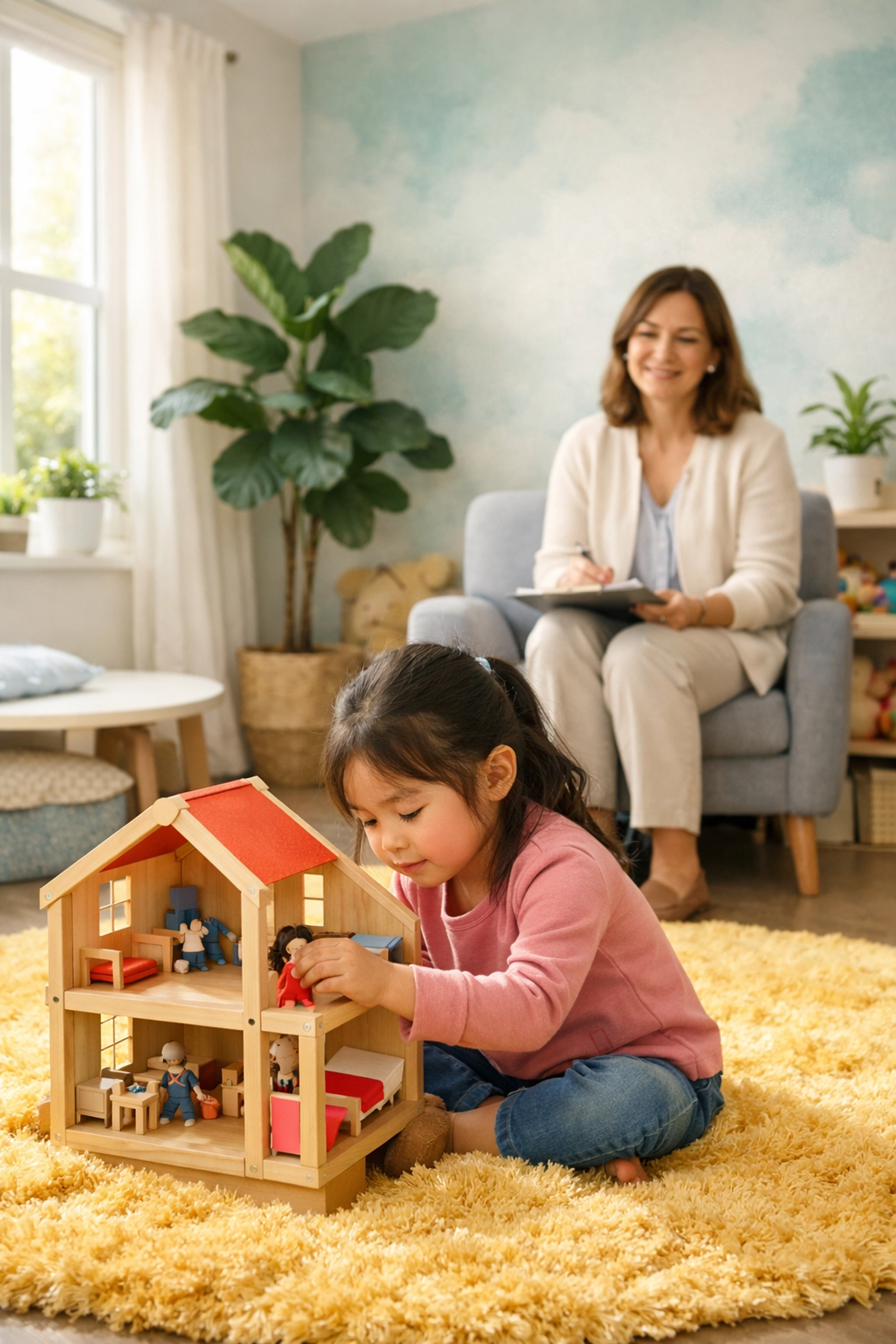
For the "coach" to really help the "player" improve their skills, they need time on the field alone. In the mental health world, we call this a "third space." It’s not home (where there are rules and chores) and it’s not school (where there are grades and social pressure). It’s a neutral territory where your child can just be.
When a parent is too involved: maybe by sitting in on every session or "pre-briefing" the therapist on exactly what the child should talk about: that third space starts to feel a lot like home. The child might start performing for you or worrying about your reaction, rather than focusing on their own feelings.
Trust is the Foundation (And it Takes Time)
If you’ve ever tried to get a cat to come out from under a bed, you know you can’t force it. You have to sit quietly, maybe offer a treat, and let them come to you on their own terms. Therapy for kids is a lot like that.
Building a therapeutic relationship: what we call the "therapeutic alliance": is the number one predictor of whether therapy will actually work. Your child needs to know that the therapist is their person. They need to feel like they have a safe container where they can say, "I’m really mad at my mom today," without worrying that you’re going to hear it and get your feelings hurt.
If the child feels like the therapist is just an extension of the parent, they won’t open up. They’ll give the "right" answers instead of the "real" ones. By letting them have their own space, you’re sending a powerful message: "I trust you, and I trust this process."
The "Drive Home" Interrogation
We’ve all been there. You pick your kid up from a session, and the first thing you say is, "So, what did you guys talk about today? Did you tell her about the thing with your brother?"
While it comes from a place of care, this can actually feel like a huge pressure for a kid. Imagine if you just had a deep, emotional workout and the second you walked out the door, someone started drilling you for details. You’d probably want to crawl into a hole!
Instead of asking for a play-by-play, try something casual. "I’m glad you got to see your therapist today. Want to listen to some music on the way home, or grab a snack?" If they want to share, they will. If they don’t, that’s okay too. Their silence doesn't mean nothing happened; it usually means they’re still processing.
Age Matters: From Toddlers to Teens
The level of involvement we ask from parents at Sunflower Counseling Center changes as your child grows.
For the Littles (Ages 3-7): Therapy often looks like play. At this age, parents are usually much more involved. We might have you join for parts of the session or do "Parent-Child Interaction Therapy." You’re a co-player in the room.
For the Middles (Ages 8-12): This is the transition phase. We might have "check-ins" with you, but the bulk of the work happens between the child and the therapist. They’re starting to develop their own identity, and they need a private space to explore it.
For the Teens: This is where the "letting go" gets real. Teens need a high level of confidentiality to feel safe. Unless there’s a safety concern (like self-harm or danger to others), what happens in the room stays in the room. It’s hard, we know! But it’s how they learn to handle their own mental health as they head toward adulthood.
If you’re curious about how our team handles these different stages, you can meet our Georgia-based counselors to see who might be a good fit for your family.

We’re Still a Team (I Promise!)
Letting the therapist have their space doesn’t mean you’re being left in the dark. You are the expert on your child, and the therapist needs your insight!
At Sunflower, we believe in a collaborative approach. We might schedule "parent-only" sessions where we can chat about the progress we’re seeing, give you tools to use at home, and hear your concerns without the child in the room. This is your time to be the "teammate" and give us the "scouting report" on how things are going at home.
Think of it this way: the therapist is working on the internal stuff with your child, and then they’re working with you to make sure the external environment (your home) supports that growth. It’s a win-win.
Affordable Support for Georgia Families
We know that seeking help for your child is a big decision, and honestly, the cost can be a huge barrier. That’s why at Sunflower Counseling Center, we’re obsessed with making mental health care accessible.
We offer affordable therapy through a sliding scale system because we believe that every kid in Georgia deserves a chance to thrive, regardless of their family’s bank account balance. Whether you’re looking for in-person sessions or telehealth, we’ve got you covered.

How to Support the Process Without Interfering
If you’re feeling a little restless about staying on the sidelines, here are a few ways you can be the world’s best "supportive parent" during your child’s therapy journey:
Be the Logistics Hero: Get them to their appointments on time. Consistency is huge. If therapy is "hit or miss," it’s hard for the kid to build momentum.
Focus on the "Home Work": If the therapist gives you something to try: like a new way to handle a tantrum or a specific communication tool: hit that goal out of the park! Your work at home is just as important as their work in the room.
Model Mental Health: Show them that taking care of your brain is normal. Maybe you have your own therapist, or you practice mindfulness. When they see you prioritizing your wellness, they’ll feel better about doing the same.
Ask the Therapist for "Themes": Instead of asking "What did you talk about?", ask the therapist, "What themes are we working on lately?" This gives you a bird’s-eye view without breaking your child’s trust.
Be Patient: Growth isn't a straight line. Some weeks will feel like a breakthrough, and other weeks might feel like a setback. Trust the journey.
You’re Doing a Great Job
Parenting is the hardest job on the planet. Wanting to be involved in every second of your child’s therapy comes from a place of pure, beautiful love. It’s okay to feel a little anxious about stepping back.
But remember, by giving them that space, you’re giving them a gift. You’re giving them the room to find their own voice, learn their own coping skills, and become the resilient person you know they can be.
If you’re ready to start this journey (or if you just need someone to chat with about the logistics), feel free to reach out to us at our contact page. We’re here to support the whole family: even if that means letting the kids have their own little corner of the world for an hour a week. 🌻

Ready to help your child grow? Check out our weekly groups for social support, or learn more about our mission to bring affordable, friendly mental health care to every corner of Georgia. Together, we can help your family bloom!

Comments